
On World Obesity Day, public discussion often centres on health ashore. For seafarers, body weight carries additional importance.
Life at sea involves long contracts, watch systems, disrupted sleep, limited dietary flexibility and reduced access to ongoing medical follow-up. Over time, these realities can contribute to gradual weight gain. What is less widely appreciated is how strongly Body Mass Index (BMI) is linked to other medical conditions that affect long-term health and fitness to sail.
BMI is not simply a number recorded during a medical examination. It is closely associated with cardiovascular disease, type 2 diabetes, hypertension, abnormal cholesterol levels and sleep disorders. In remote maritime environments, where immediate hospital care may not be available, prevention becomes especially important.
Evidence from the Maritime Workforce
At the 17th International Symposium on Maritime Health (ISMH17), a large observational study examined BMI patterns in 4,625 Greek seafarers.
The data were collected through the Health4Crew digital health platform, analysing anonymised medical examination records across fleets. The study was authored by Laura Benzonana and Dr Christos Dimopoulos (in-house physician, Angelicoussis Group) and published in International Maritime Health (Benzonana & Dimopoulos, 2025).
The study showed that:
- The average BMI of male seafarers fell within the overweight range.
- Officers had higher average BMI than non-officers.
- BMI increased with age.
- Higher BMI was associated with a greater likelihood of abnormal cholesterol levels.
- Abnormal cholesterol is one of the principal contributors to coronary artery disease.
A Global Pattern
These findings are consistent with research conducted across different maritime populations.
A study of mixed-nationality merchant crews found overweight to be common onboard (Nittari et al., 2019). Danish research has reported elevated obesity rates and unhealthy lifestyle patterns among seafarers compared with shore-based populations (Hjarnoe & Leppin, 2014; Hoeyer et al., 2005). Comparative work involving European and Filipino seafarers has identified similar weight-related trends (Neumann et al., 2021). Occupational health screening data from Chinese seafarers have also documented elevated BMI levels (Cui et al., 2025). Longitudinal studies suggest that time spent at sea can influence measurable changes in health status over time (Russo et al., 2023).
Across different nationalities and trades, the message is consistent: BMI is a practical early marker of broader health risk.
The aim is not judgement. It is awareness and prevention.
Why BMI Matters
Excess body fat is biologically active. It influences metabolism, blood vessel function and hormone regulation. Over time, these changes increase the likelihood of chronic disease.
Cardiovascular Disease
Higher BMI is strongly linked to abnormal lipid profiles and increased cardiovascular risk (World Health Organization, 2023). The ISMH17 study confirmed this association within a large seafarer cohort (Benzonana & Dimopoulos, 2025).
Cardiovascular events remain among the most serious medical emergencies at sea.
Type 2 Diabetes
Overweight and obesity significantly increase the risk of type 2 diabetes (NIDDK, 2023). Diabetes increases the likelihood of heart disease, stroke and kidney complications. Early detection during routine examinations allows for lifestyle adjustments before complications develop.
High Blood Pressure
Increased body weight contributes to raised blood pressure, often without symptoms (European Society of Cardiology, 2021). Untreated hypertension remains a major cardiovascular risk factor.
Sleep and Fatigue
Higher BMI increases the likelihood of obstructive sleep apnoea. Poor sleep quality contributes to fatigue and reduced concentration. In safety-critical environments, alertness and decision-making are essential.
Musculoskeletal Strain
Excess weight places additional stress on joints and the spine, contributing to chronic back pain and mobility problems.
Why Prevention Is Especially Important at Sea
Distance from shore-based healthcare changes the consequences of illness. Conditions that are manageable ashore can become more serious offshore.
Because BMI is linked with cholesterol abnormalities and broader cardiometabolic risk (World Health Organization, 2023; Benzonana & Dimopoulos, 2025), monitoring and gradual lifestyle adjustments are particularly important for seafarers.
Prevention is about protecting long-term health and maintaining readiness for duty.
Practical Steps
Small, consistent actions can reduce risk over time:
- Know your BMI.
- Monitor blood pressure.
- Review cholesterol and blood glucose during medical examinations.
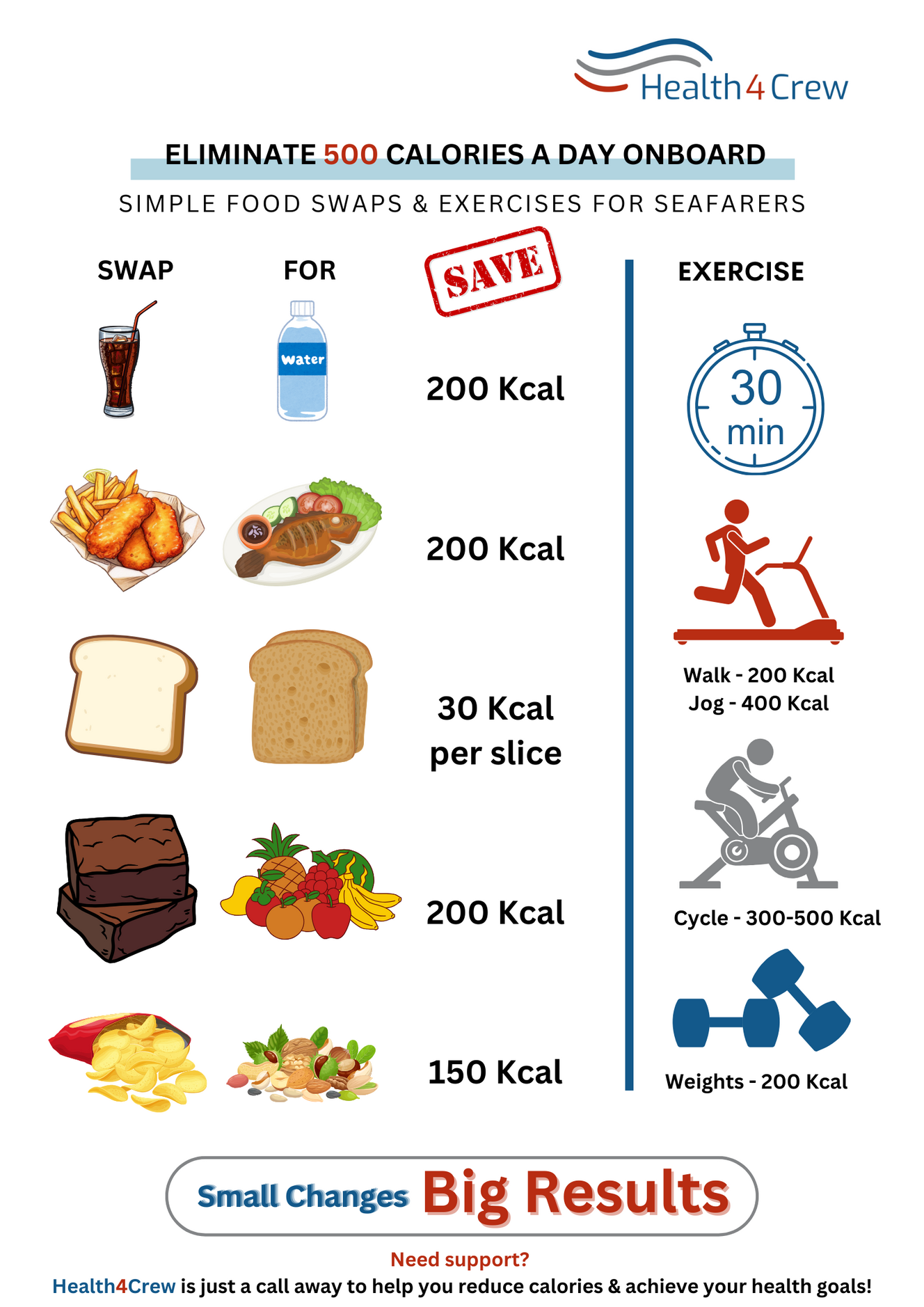
- Moderate portion sizes.
- Reduce high-sugar drinks.
- Maintain regular physical activity onboard.
- Prioritise sleep.
- Report persistent symptoms early.
- Early awareness allows early intervention.
Conclusion
Overweight and obesity are increasingly recognised across maritime populations and are linked to abnormal cholesterol levels and broader cardiometabolic risk.
BMI is not merely a figure on a medical certificate. It can serve as an early warning sign.
Maintaining a healthy weight supports energy, endurance, resilience and long-term career sustainability.
Awareness today supports health tomorrow.

Author: Laura Benzonana, PhD (Health4Crew CEO)
Further information:
Health4Crew:
laura@health4crew.com
www.health4crew.com
Tel.: +30 211181369
+30 6981172635
Related news
-

-

-

Marine Biofuel an Overview
22/01/2026
-

EU ETS and Shipping from 1 January 2026
21/01/2026