
What is the prostate?
The prostate is part of the male reproductive system and is a gland. Glands produce and release a variety of different hormones into your body.
What does it do?
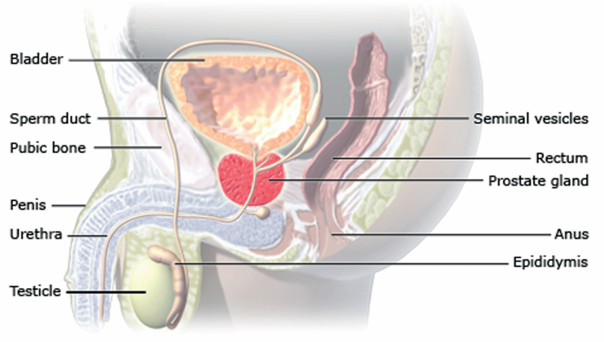
It produces a fluid that mixes with sperm cells from the testicles and fluid from other glands, which make up semen (ejaculate). The prostate muscles ensure that semen is forcefully pressed into the urethra and then expelled outwards during ejaculation.
Where is it?
The prostate is about the size of a walnut and is located underneath the bladder and in front of the rectum. It does get bigger with age.
What is prostate cancer?
Prostate cancer is a form of cancer, which begins in the gland cells of the prostate, which is only found in males. It is one of the most common types of cancer that males can develop.
Statistics
- Prostate cancer is the 2nd most commonly occurring cancer in men and the 4th most common cancer overall. (“World Cancer Research Fund International”)
- There are over 1.5 million new cases diagnosed per year worldwide. (“World Health Organisation”)
What are the risk factors that make a person more likely to get prostate cancer?
- Prostate cancer mainly affects men over 50 years of age and the risk increases with age.
- The risk is even higher for black men and the risk may be from the younger age of 45 years.
- The risk is higher for men with a family history of prostate cancer. The risk increases by two and a half times if a close family member has been diagnosed with prostate cancer (i.e. father or brother), compared to a man who has no relatives with prostate cancer. It is strongly recommended to speak with other men in the family to find out if they have had prostate cancer so to better understand an individual’s risk factors.
- The risk may also be higher if a close female relation, i.e. mother or sister, has had breast cancer. Again, it’s recommended to talk openly about family health and find out.
- Being overweight or obese increases the risk of prostate cancer.
Early warning signs to be aware of
As with many types of cancer, in the early stages there may not be any symptoms which means understanding the risk factors are even more important. Once the cancer has grown large enough it will begin to put pressure on the urethra (the tube that carries urine from your bladder out of the penis).
Common symptoms to look out for
- Needing to pee more frequently, often during the night or when sleeping.
- Needing to rush to the toilet.
- Difficult in starting to pee.
- Straining or taking a long time while peeing.
- Weak flow of urine.
- Feeling that the bladder has not been fully emptied.
- Blood in the urine or blood in the semen (ejaculate).
These symptoms do not necessarily mean a person has prostate cancer but it means that they should report to the medical officer in charge and seek further advice. Never ignore these symptoms as early detection of prostate cancer will give a chance at a better outcome.
What to do if you develop any of these symptoms
If onboard and any of the above symptoms develop it is important to report to the Medical Officer in charge and accurately relay the symptoms to them. They will likely take down a lot of information that may not seem relevant but when the information is passed to a Doctor ashore they always need to make sure that everything they may want to know is documented.
It is important to think about the risk factors mentioned above and be sure to mention any of them to the Medical Officer onboard so that they document it for sharing with the onshore Doctor. This will help doctors plan the most appropriate response to your symptoms.
The medical officer is likely to assist with symptoms via the help of the onshore Doctor and an onshore appointment will be arranged to see a Doctor in person.
Collaboration note
This advice was compiled in collaboration with Red Square Medical, who offer a full range of maritime medical services, from training and consultancy services, right through to mass casualty incident planning and training. www.redsquaremedical.com