
Fuel characteristics and industrial background
Liquefied natural gas (LNG) is natural gas transported and stored as a non-toxic cryogenic liquid, composed predominantly of methane. It has been shipped globally in bulk for more than 60 years in specialist gas carriers, many of which use boil-off gas from cargo tanks as fuel for propulsion. This long history of carriage and use has resulted in a strong understanding of LNG properties, handling requirements and associated risks, making it one of the most established alternative fuels currently available to the maritime sector.
Production pathways and decarbonisation role
LNG is produced through the purification and liquefaction of natural gas extracted from hydrocarbon reservoirs, which are widely distributed globally and underpin its broad availability. Lower-carbon alternatives, including bio-LNG derived from biogas, are increasingly being developed and can significantly reduce lifecycle emissions compared with conventional fossil-based LNG. Nevertheless, the majority of LNG supplied to the marine market remains fossil derived, and it is therefore generally regarded as a transition fuel, offering emissions reductions relative to conventional fuel oils while bridging towards zero-carbon options such as ammonia and hydrogen.
Infrastructure, fleet uptake and operational experience
LNG benefits from extensive existing infrastructure and operational maturity. More than 220 ports worldwide are capable of LNG bunkering, and LNG-capable vessels represent the largest share of the alternative-fuelled fleet, with more than 1,500 vessels in operation and a substantial orderbook. Adoption is particularly strong in the containership sector, exemplified by the deployment of ultra-large, LNG-fuelled container ship classes such as CMA CGM’s JACQUES SAADÉ class (≈23,000 TEU), Hapag-Lloyd’s HAMBURG EXPRESS class (≈23,600 TEU) and Evergreen Marine’s 24,000 TEU LNG dual-fuel, newbuild classes, alongside growing LNG-fuelled fleets operated by COSCO Shipping in the 18,000 TEU segment.
Most LNG-fuelled vessels are dual fuel, providing operational flexibility but also introducing additional complexity in incident response where multiple fuel types may be involved.
Safety framework, training and risk considerations
The global transport of LNG has an exemplary safety record, supported by rigorous engineering standards, specialist crews and established operational procedures. Regulatory requirements are well defined under the IGC Code for gas carriers and the IGF Code for LNG-fuelled ships. However, as LNG use expands beyond specialist vessel types, maintaining this safety performance will depend on continued investment in training, drills and risk management. Operational pressures have the potential to erode safety margins, reinforcing the importance of sustained competence and preparedness as LNG deployment continues to scale.
Behaviour in the marine environment and associated impact
1. Containment and transport
LNG is a colourless, non-toxic gas at ambient conditions, but it is transported and stored as a cryogenic liquid to increase storage density and reduce its volume by a factor of approximately 600. On LNG-fuelled vessels, bunkers are stored in dedicated cryogenic containment systems engineered to keep LNG below its boiling point (-162°C), to control boil-off and to prevent leakage. Typical arrangements include self-supporting, pressurised (approximately 4–10 bar) IMO Type C double-walled tanks with high-performance insulation, although other options are also used.
To minimise loss of containment, LNG systems incorporate multiple layers of technical and operational safeguards, such as double-walled containment, nitrogen inerting of tanks and lines, controlled cooldown to prevent thermal shock or integrity testing prior to disconnection. These measures are executed within defined safety and security zones by crews trained to IGF Code standards, contributing to exceptionally low leakage rates in normal operations.
2. Fate and behaviour following release
Although loss of containment is rare, if LNG is released into the marine environment, its fate and behaviour are governed by its cryogenic temperature, volatility, density, insolubility in water and flammability characteristics (Table 3).
Physical property | Value | Behaviour/expected observations |
| Boiling point | -162°C | Immediate flashing and vaporisation after loss of containment. |
| Liquid specific gravity (@ -162°C) | 0.415 – 0.45 | LNG has less than half the density of water; therefore, as a liquid, LNG will float if spilled on water. |
| Vapour specific gravity (@ -106°C) | 1.5 | The vapour is heavier than air when the vapour temperature is less than -106°C, i.e. when LNG initially vaporises. |
| Vapour specific gravity (@ 20°C) | 0.55 – 1.0 | LNG vapours at ambient conditions are lighter than air (buoyant) and will easily disperse in open or well-ventilated areas. |
| Solubility | Insoluble | Liquid LNG will not mix with water (runoff) or seawater. |
| Flammability range | 5.0 – 15.0 (v/v) % | Outside of this range, the LNG/air vapour mixture is not flammable. |
Table 1: Summary of key LNG properties dictating its hazards, fate and behaviour[1],[2]
When released above the waterline, LNG will fall to the sea/land surface and float as a shallow pool while simultaneously vaporising. This generates an initially cold, ground or sea-hugging cloud that becomes buoyant and disperses as it warms (Figure 3). Importantly, the ‘LNG fog’ often observed is not the dense methane cloud itself but atmospheric water vapour condensed by LNG’s extremely low temperature.
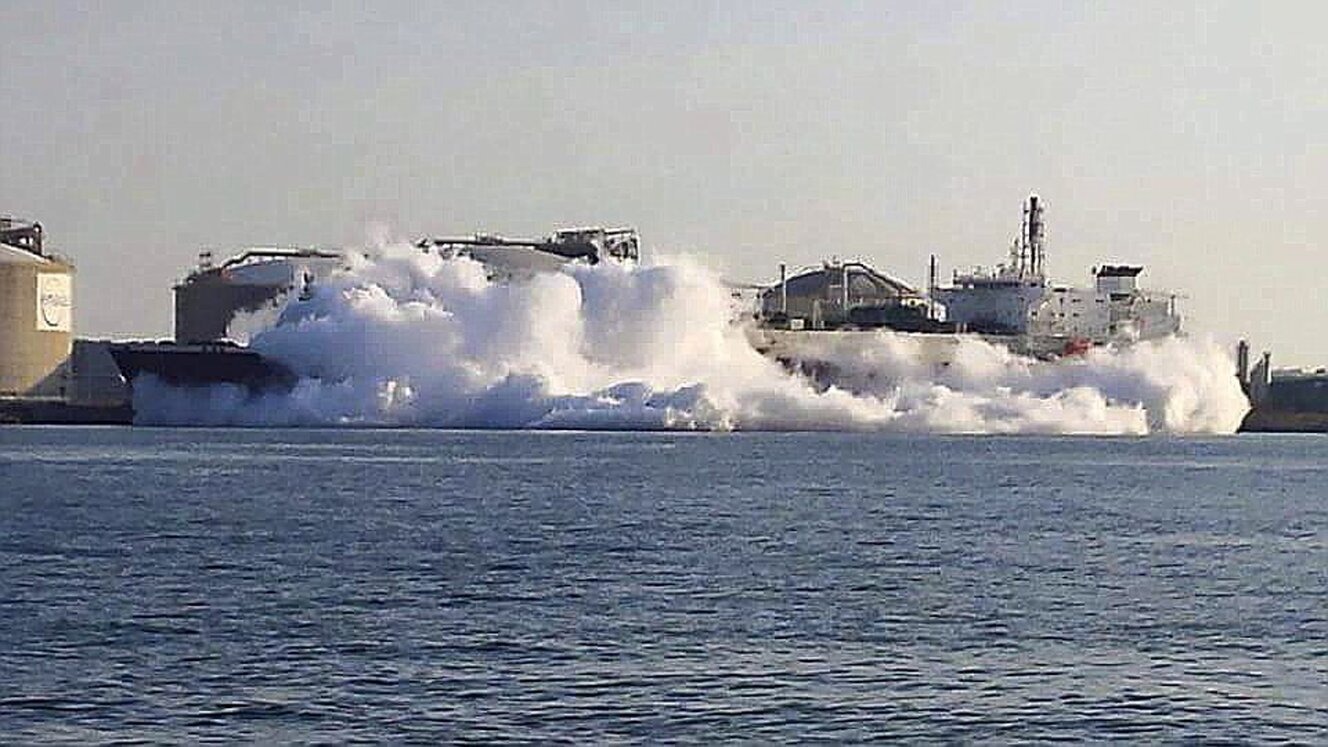
Figure 1: LNG vapour released during discharge operations in Barcelona in 2016 (Source: Tradewinds)
If released below the waterline, the LNG will rise to the water surface and rapidly flash to vapour, resulting in the same dense cloud appearing above the water before dispersing. The short period during which LNG exists as a cold vapour close to the surface is operationally significant because flammability hazards can peak during this window. During this period, typically minutes to tens of minutes, depending on breach size and wind conditions, the vapour can enter its flammable range, creating acute risks of vapour cloud or pool fires, rapid phase transition (RPT) overpressures and, potentially, a boiling liquid expanding vapour explosion (BLEVE). It is worth noting that these potentially flammable conditions can extend beyond the visible cloud/fog.
As LNG is insoluble in water, attenuation is driven primarily by evaporation and atmospheric dispersion, which generally occur more rapidly under warm, windy conditions (Figure 2).
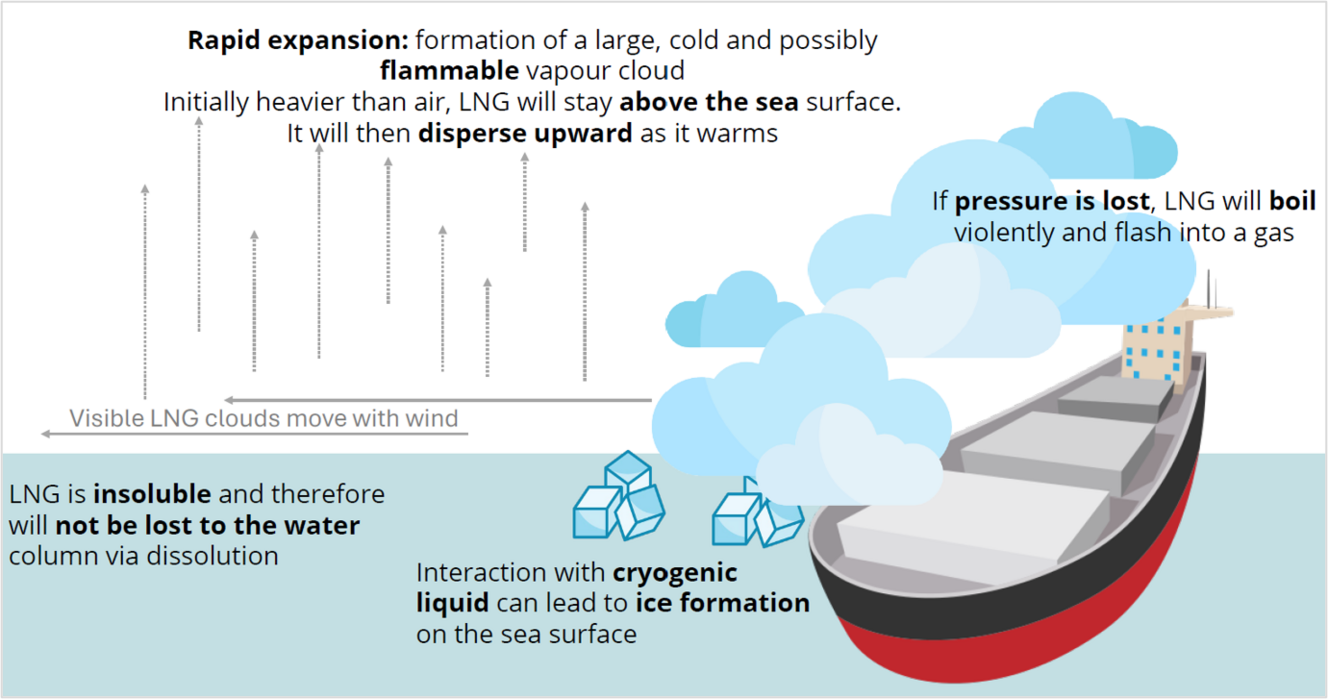
Figure 2: Expected fate and behaviour of LNG after release into the marine environment
3) Impacts on human health: Flammability and cryogenic damage
The predominant safety risk during an LNG incident is flammability, which is closely linked to whether vapour concentrations enter the flammable range (5.0–15.0% v/v in air) (Figure 3). In practical terms, responders and crews focus on the lower flammable limit (LFL), which can be monitored using portable gas detectors. Alarms are typically triggered at around 10% of the LFL. Above the LFL, flammable conditions exist unless concentrations exceed the upper flammable limit (UFL), at which point the atmosphere becomes too fuel-rich and oxygen-poor to sustain combustion.
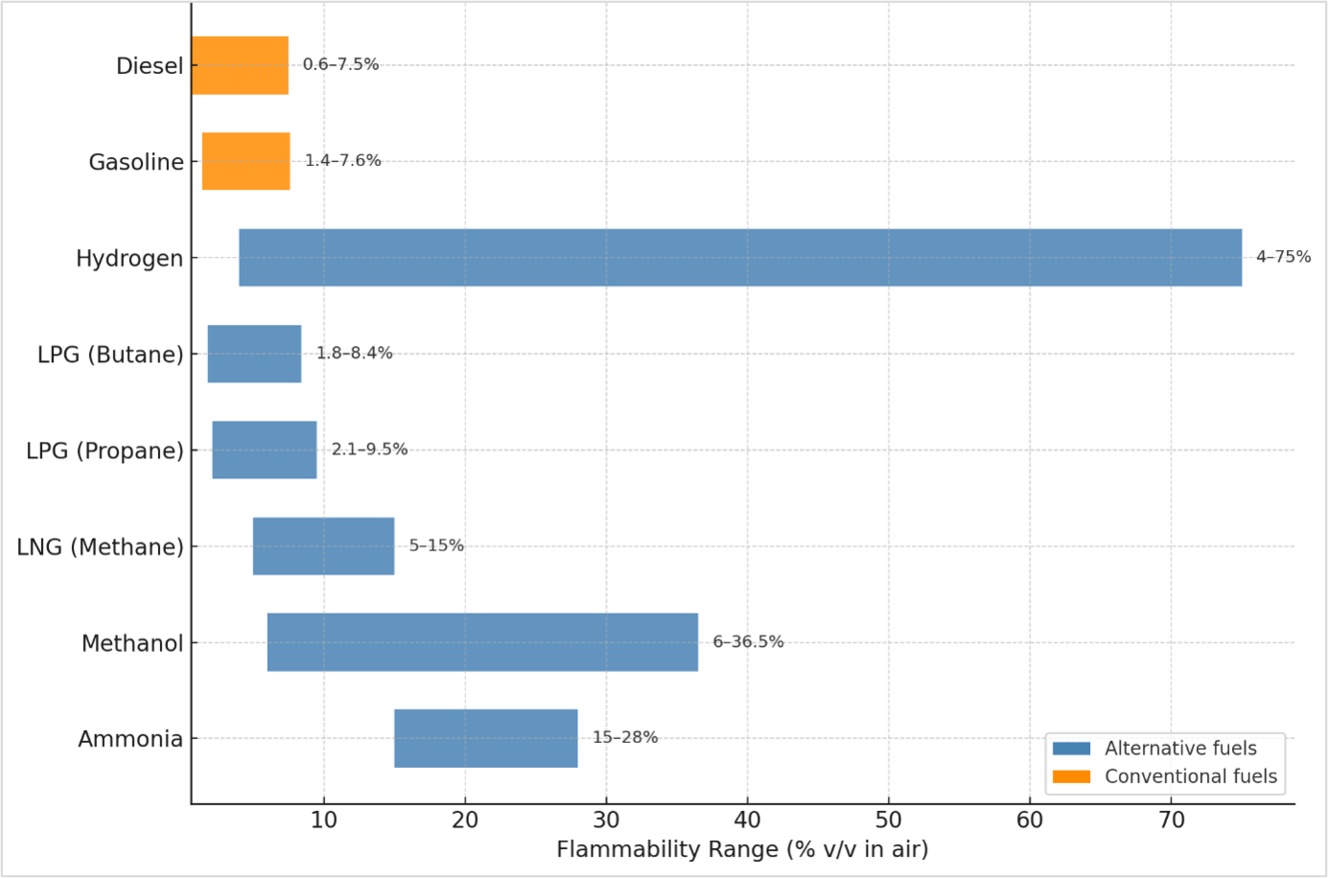
Figure 3. Flammability ranges of alternative fuels, including LNG, ammonia and methanol, and some conventional fuels (diesel and gasoline)
In unconfined spaces, an LNG release from a tank or pipeline will rapidly mix and dissipate, meaning that only a small area near the leak is likely to reach concentrations capable of ignition. By contrast, in confined or poorly ventilated spaces, vapours cannot disperse and may stratify, creating a flammable vapour/air mixture at high points (e.g. near ceiling height). While the interior of a fuel storage tank contains almost pure LNG vapour and is therefore not within the flammable range, a leak or rupture that allows mixing with air can produce a cloud that enters the flammable range. If ignition occurs immediately, a pool fire may form and continue until the fuel is consumed. If ignition occurs after a cloud has formed, a vapour cloud fire may result, which can propagate back to the spill source and may cause a pool fire. Wind conditions can influence whether flame propagation back to the leak source occurs, but the key operational point is that the visible cloud does not define the full extent of the flammable zone.
A further hazard during the dispersion window is the possibility of rapid phase transition (RPT) overpressures, and potentially a boiling liquid expanding vapour explosion (BLEVE) if systems to prevent over-pressurisation fail. These escalation pathways are not the norm, but they are part of the risk considered when LNG is released under conditions of confinement, heat exposure or compromised pressure relief.
A secondary but important hazard is cryogenic injury from direct contact with liquid LNG or residual super-cold pools. Hands and feet are particularly vulnerable. Oxygen depletion and asphyxiation are also relevant in enclosed areas where vapours displace air.
4) Exposure control and operational implications
Given that fire and explosion hazards dominate, the response posture centres on ignition control, protective zones and gas monitoring. Responders should wear firefighting gear (bunker gear) when fire risk exists. Because LNG is non-toxic, gas-tight suits are not required and not appropriate when flammability is a hazard. Due to LNG’s cryogenic temperature, standard firefighting gloves and boots do not provide adequate protection where liquid exposure is possible. Therefore, thermally insulated gloves and boots designed for cryogenic conditions are required. Self-contained breathing apparatus (SCBA) is appropriate in unknown atmospheres or where oxygen depletion may occur. However, once the level of oxygen is confirmed as normal and conditions are safe, respiratory protection is not required.
5) Environmental effects and persistence
Because LNG is insoluble, there is no pathway for the substance to dissolve into the marine environment. Natural attenuation is therefore dominated by evaporation and atmospheric dispersion. Warmer, windier conditions generally reduce concentrations more rapidly than colder, less windy conditions.
Environmental effects are primarily associated with the cryogenic nature of LNG. The main environmental mechanism is rapid cooling of air and water at the release point, producing acute, short-lived, highly localised impacts. Unlike conventional oil, LNG components are insoluble and not bioavailable in the same way (e.g. via ingestion or absorption across gills or skin). However, if a vessel were to ground on sensitive habitats such as a coral reef, a sudden drop in water temperature could trigger cold-induced bleaching, metabolic disruption, tissue damage or mortality in corals. Water temperature is expected to return to normal quickly with increasing distance from the release site.
A secondary environmental pathway arises if ignition occurs, in which case, impacts would typically be confined to organisms at or near the surface and pelagic birds in the vicinity, with thermal exposure and direct flame contact being the primary injury mechanisms.
Overall, LNG releases are characterised by a rapid phase change, and a hazard profile dominated by flammability, cryogenic exposure and asphyxiation risk in confined spaces, with environmental impacts generally acute and localised.
Response considerations for releases of LNG
A response to an alternative fuel release is expected to differ significantly from a conventional oil spill response, with a broader and more specialised range of stakeholders likely to be involved. Fire and rescue services, for example, may be among the first notified, reflecting the acute hazards associated with flammable or toxic atmospheric plumes. However, as with oil spill response, preparedness remains essential to ensure that any intervention is effective, timely and well coordinated.
The presence of toxic or flammable vapour clouds may prevent on-scene operations until concentrations fall to safe levels through evaporation, dispersion or dilution.
In recognition of these unique challenges, many port and national authorities are increasingly developing dedicated hazardous and noxious substances (HNS) contingency plans or integrating HNS considerations into existing oil spill contingency frameworks. This reflects the growing presence of vessels carrying alternative fuels in their waters and the corresponding need to be prepared for potential response actions.
The primary action from the crew on board or those undertaking bunkering operations following a release is to isolate and stop the release by activating the Emergency Shutdown and Emergency Release Coupling systems, secure valves, establish safety and exclusion zones, and control ignition sources. Under Section 15.8 of the IGF Code, it is mandatory for LNG-fuelled vessels to have fixed gas detectors installed, and these will be augmented with the crew’s portable detectors. Gas detection will allow responders to understand whether the release has caused the atmospheric concentration of LNG to reach potential flammable or asphyxiative concentrations. If that is the case, plume and trajectory modelling can be used to define/adjust exclusion zones as appropriate.
If a large release were to occur nearshore with metocean conditions pushing an LNG plume over a population centre, shelter-in-place orders may be required to ensure that exposure is limited. Evacuation measures could also be used; however, if these are not preplanned and regularly rehearsed (for areas near LNG terminals), these orders may result in panic and reduced effectiveness. Monitoring and evaluation should be undertaken until gas detection equipment demonstrates that there is no longer an increased risk as LNG concentrations have reduced to pre-spill levels. It should be noted that gas detection does not necessarily require human interaction, with UAVs/ROVs being mounted with detection equipment a possible solution. This reduces the risk to responders and allows remote assessment. However, for LNG incidents due to potential flammability and the static charge from this equipment, these devices need to be intrinsically safe or ATEX-certified.
As LNG rapidly vaporises at ambient conditions, recovery of the substance is not possible, unlike oil where traditional boom and skimmers are used. Therefore, priorities are source control, atmospheric monitoring and public safety. Despite recovery not being possible, control measures can be undertaken, such as the use of water spray/curtains. These act as barriers to ‘steer’ and ‘dilute’ cold vapours away from ignition sources and protected locations (e.g. local population centres) or to avoid creating confined vapour pockets that could lead to asphyxiative or flammable conditions. In addition, the use of water spray can warm the LNG pool faster, increasing its buoyancy faster and reducing flammability hazards. Due to LNG’s insolubility, firefighting runoff will not be contaminated and therefore stringent management is not necessary, unlike for other alternative fuels such as ammonia.
As many of these actions are necessary immediately after a release and are specialised, it is essential that operators and responders are trained regularly to undertake these response measures and that roles and responsibilities are clearly included in a contingency plan.
Special thanks are extended to ITOPF for their invaluable expertise and contribution to the research and development of this article.
[1] GIIGNL. 2023. “LNG Information Paper #1 – Basic Properties of LNG”. 2019, GIIGNL. Neuilly-sur-Seine, France
[2] NOAA. 1999. “Liquefied Natural Gas – CAMEO chemicals profile”. June 1999, NOAA. Washington DC, USA
Related news
-

米国がイラン石油取引に関する制裁を緩和 ― メンバーへの主な影響
01/07/2026
-
深刻化する課題、海上での貨物火災への取り組み
17/06/2026
-
CO2TIME2026:拡大するCO₂海上輸送にかかわる標準契約書式
12/06/2026
-
ベネズエラ向け海運:再び動き出す市場への対応
22/06/2026