

Little Venice:運河やゴンドラではなく、広大な石油埋蔵量の土地
16世紀初頭にスペインの航海者達によってリトル・ベニスの意味で名付けられたベネズエラは、地政学的変化や制裁の一部緩和、そして同国が有する膨大な石油資源への大規模投資を背景に、再び国際エネルギーおよび海運市場において存在感を高めつつあります。これにより、エネルギー関連貨物の輸送需要が拡大し、海運業界に新たなビジネス機会が生まれつつありますが、この市場の再開には依然として複雑で高いリスクが伴います。制裁体制は流動的かつ複雑であり、船主やオペレーターは意図せず制裁違反に至るリスクに直面します。そのため、取引相手、契約条件、貨物流通などについて、より徹底したデューデリジェンスが不可欠です。
こうした状況下では、ベネズエラでの事業展開には、商業機会と同時に法規制、コンプライアンス、レピュテーションリスクを総合的に管理する慎重な対応が求められます。海運関係者は、変化し続ける規制および地政学的環境に柔軟に対応していく必要があります。
詳細は本記事をご覧ください。
“Little Venice”: a land of vast oil reserves, not canals and gondolas
Venezuela’s natural beauty and vast resources were first noted by Spanish navigators in the early 16th century. It was during this period that Alonso de Ojeda named the territory “Venezuela,” or “Little Venice,” inspired by the stilt houses he observed around Lake Maracaibo, which reminded him of Venice. From the moment of its naming, a previously unknown and viscous substance – used by indigenous peoples and known as “mene” – came to define Venezuela’s trajectory. This same resource, petroleum, has shaped the country’s history, development, and culture for more than a century.
Venezuela’s oil industry emerged in the late 19th century and became firmly established in the early 20th century. From 1914 until the 1960s, the country stood as the world’s leading oil exporter, with peak production of 3.7 million barrels per day, and it remained among the top exporters into the early 21st century. Massive investments in operations and infrastructure helped position Venezuela as a reliable source of oil throughout much of the 20th century. These included the development of Paraguaná – the world’s second-largest refinery complex – extensive pipeline networks, major oil terminals, and the establishment and acquisition of a network of companies abroad, including CITGO in the United States.
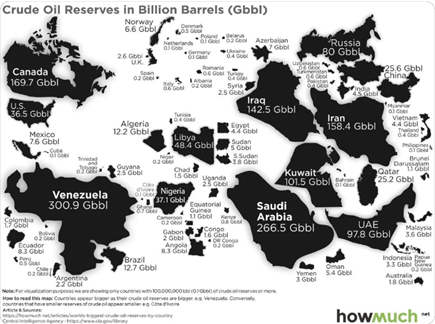
Not surprisingly, Venezuela holds the largest proven oil reserves in the world of 300 billion barrels. ‘Proven reserves’ refers to the quantities of oil that can be extracted with reasonable certainty using current technology and under prevailing economic conditions.[1]
Political developments in the early 21st century marked a shift in Venezuela’s economy toward more centralized and state-led policies, including in the oil and gas sector, its development, and long-term strategy. These changes ultimately had adverse consequences for the country’s economic performance and the sustainability of its energy industry.
However, more recent geopolitical developments have brought Venezuela back into focus within the global energy landscape, with renewed expectations that the country may increase its oil production. Following law amendments within Venezuela and the flexibilization of international sanctions, international oil majors have announced significant investments aimed at rehabilitating Venezuela’s extensive oil infrastructure, with reported commitments in the region of US$100 billion over the coming years.[2]
Such a significant level of investment is already driving a rebound in Venezuela’s economy. This, in turn, is expected to have a positive impact on the country’s oil exports, as well as on the volume of shipments of goods, equipment, and machinery required to support the revival of Venezuela’s oil and gas industry, and wider economy.
Venezuelan oil reserves and transport infrastructure to carry the oil
When looking at Venezuela’s energy map, one could almost say that the country itself is an oil well. However, the bulk of its reserves are concentrated in Eastern Venezuela, particularly in the Orinoco Belt, and around Lake Maracaibo in the west, including offshore wells in the Gulf of Venezuela and in the Caribbean.
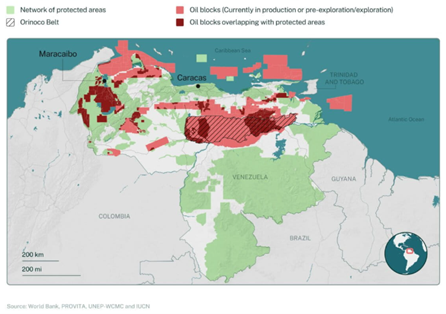
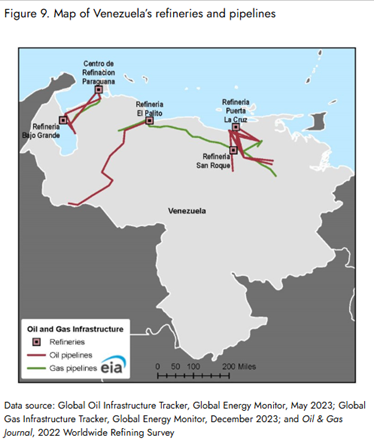
Crude produced in the Orinoco Belt is typically heavy and high in sulfur content. It is transported via pipelines to upgrading facilities, where it is blended with diluents to improve its density and make it suitable for refining – either in domestic refineries or for export by sea, primarily through the oil terminals of Jose and Puerto La Cruz. Notably, many refineries in Texas and Louisiana were specifically designed decades ago to process this type of Venezuelan crude.
By contrast, crude produced in the Lake Maracaibo region is generally lighter and easier to handle. It is transported via pipeline to local refineries, such as those in Paraguaná and San Lorenzo, or exported by sea via oil terminals, such as Puerto Miranda and Amuay, for refining abroad.
Increase in the number of shipments: what to bear in mind
Due to the rapidly evolving circumstances surrounding Venezuela’s economy, a marked increase in shipments to and from the country is expected. The Club recommends that Members bear the following in mind:
- Sanctions: International sanctions regimes, including those imposed by the United States, the United Kingdom, and the European Union, have been progressively eased. However, a number of important restrictions and conditions remain in place, requiring careful consideration, appropriate legal advice, and thorough due diligence before committing to trade involving Venezuela. In particular, certain general licenses issued by OFAC permit specific international oil and gas companies to engage in activities such as exploration, production, trading, and transportation of Venezuelan oil. The Club strongly recommends obtaining legal advice and conducting comprehensive screening of all parties involved in any proposed transaction.
- Cargo claims: The Ley de Comercio Marítimo governs cargo claims in Venezuela, incorporating elements of both the Hague-Visby Rules and the Hamburg Rules. Venezuelan courts often assert jurisdiction over cargo claims where proceedings are commenced locally. As a result, jurisdiction and governing law clauses contained in bills of lading may not be automatically upheld.
- Third-party property damage claims: Collisions and allisions are typically investigated by the Capitanía de Puerto (Harbour Master) at the relevant port. However, claims may subsequently be brought before the maritime courts.
- Ship arrest: Venezuelan maritime courts may order a prohibición de zarpe (a judicial prohibition on sailing) or the arrest of a vessel, including sister ship arrest, upon the allegation of a maritime claim under the Ley de Comercio Marítimo.
- Shipowner’s limitation of liability: Venezuelan law provides for a tonnage-based limitation of liability regime inspired by the 1976 Convention on Limitation of Liability for Maritime Claims (LLMC 1976). Venezuela is also a party to the 1969 Civil Liability Convention (CLC 1969) in respect of oil pollution liability.
- Oil terminals: Key oil terminals, including Jose, Puerto La Cruz, Puerto Miranda, and Amuay, remain operational. However, a sudden increase in traffic may place pressure on berth availability and terminal operations.
- Commercial ports: Major commercial ports – such as La Guaira, Puerto Cabello, Maracaibo, and Guanta – have the infrastructure to handle increased cargo volumes. That said, constraints in cargo-handling equipment may lead to operational bottlenecks, particularly in the context of a rapid surge in activity.
The Club’s teams, including those based in New Jersey and San Francisco, together with our global network of correspondents and risk management specialists, are well positioned to assist Members in navigating the evolving landscape in Venezuela. Please do not hesitate to contact us should you require further information or guidance.
[1](Map Shows How Venezuela’s Oil Reserves Compare to Rest of World – Newsweek)
[2] Trump says US oil firms will invest $100B in Venezuela’s energy sector | Fox Business
Related news
-
米国によるイラン産石油取引の猶予期間について ― 最新動向と主な影響
16/07/2026
-
-
LNG-代替燃料流出への対応上の留意点
15/07/2026
-
米国がイラン石油取引に関する制裁を緩和 ― メンバーへの主な影響
01/07/2026